
How to Choose Curtains for Privacy
Privacy depends on more than how opaque a fabric appears. Daylight, evening lighting, the view towards the window and the way the room is used all affect how much can be seen. A well-planned layered scheme can preserve daylight and the outlook while providing greater screening when it is needed.
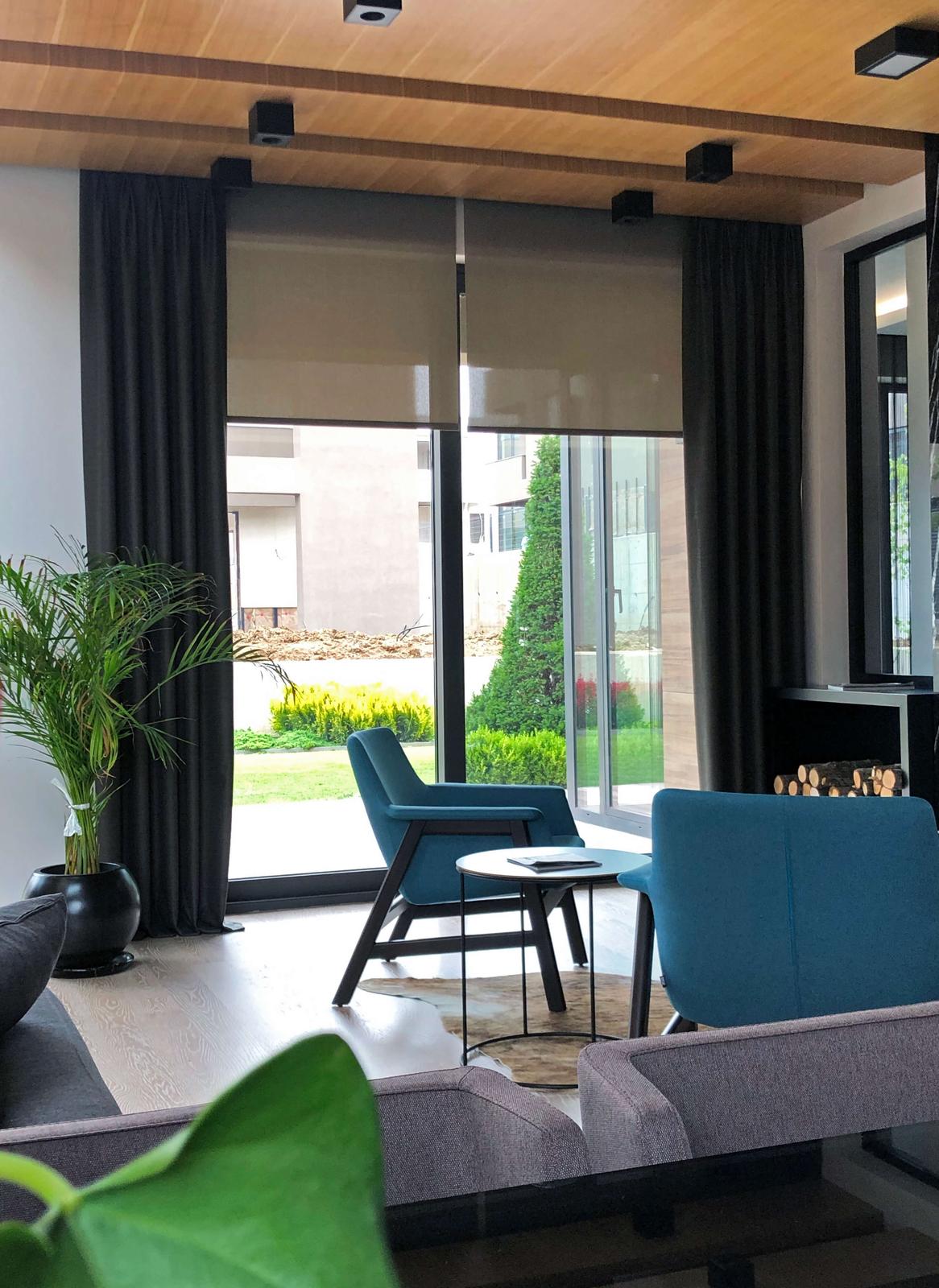
Daytime privacy is not evening privacy
When it is brighter outside, a sheer curtain or a suitable screen fabric can reduce the view into a room while retaining some outlook. Once the lights are on after dark, that balance can reverse. Neither a sheer nor a screen fabric should be assumed to provide complete evening privacy on its own.
Why layers offer greater flexibility
Combining a sheer or screen layer with curtains, a dim-out fabric or a blackout blind allows the window treatment to respond at different times of day. In a living room, retaining the view may take priority; in a bedroom, closing gaps and achieving reliable night-time screening are usually more important.
Take account of the aspect and surroundings
Ground-floor rooms, nearby buildings, busy footpaths and overlooking windows may call for stronger screening. View the fabric at the window in daylight and after dark, because colour, weave openness and interior lighting all change what can be seen.
Quick selection guide
Which option is suitable, and when?
- Sheer curtains with full curtainsUse separate layers for soft daylight and evening screening.
- Screen blind with an opaque layerCombine glare and outlook control with dependable privacy after dark.
- Dim-out or blackout layerProvides a more complete closure where stronger screening is required.
Related solution