
What Are Wave Curtains?
Wave curtains use a heading and track system that creates a continuous sequence of even, S-shaped folds. Also described internationally as wave or ripple fold, this look depends on the right track, carrier spacing, fabric and measurements working together.
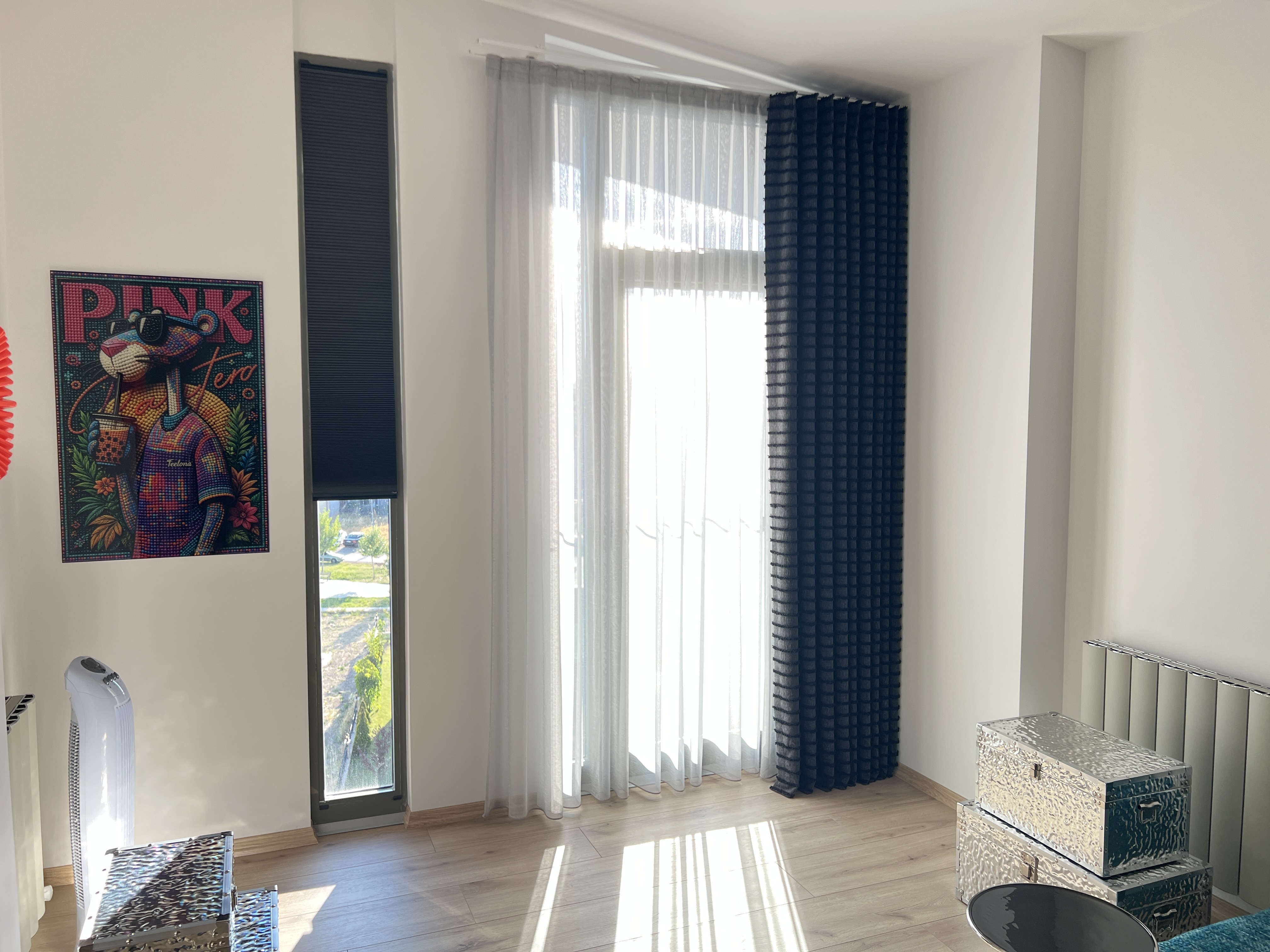
How are wave folds formed?
Regular S-shaped folds are created through suitable heading tape or a carrier system, carrier spacing along the track, accurate making and an appropriate fabric. They are not simply formed by bending the fabric by hand. The wave effect is the result of the complete installation rather than a particular type of fabric.
Why does fabric choice matter?
Not every fabric produces the same wave. Weight, drape, flexibility, construction and thickness can all influence how evenly the S-shaped folds sit.
Sheers, linen-look sheers and suitable curtain fabrics can create different effects. Wave headings are not limited to sheers: with the right fabric and system, they can also be considered for curtains and some layered schemes.
Tracks, measurements and installation
Plan the total track width, curtain drop, carrier arrangement, opening direction and stacking space together at the design stage.
Wave curtains can suit living rooms, bedrooms, large windows, high-ceilinged interiors and commercial projects, but are not automatically the right choice for every space. With a motorised track, the fabric weight and the load capacities of both track and motor must also be checked.
Quick selection guide
Which option is suitable, and when?
- A simple, contemporary lookEven, flowing folds
- Large windowsA continuous, rhythmic curtain arrangement
- Floor-to-ceiling installationEmphasising the room’s height
- Motorised tracksConsistent movement and convenient use in suitable projects
Related solution