
Window Treatments for Unusually Shaped Windows
For sloping, triangular, trapezoidal and other unusually shaped windows, the right treatment depends on the opening method, dimensions, fixing surface and the technical limits of the chosen system.
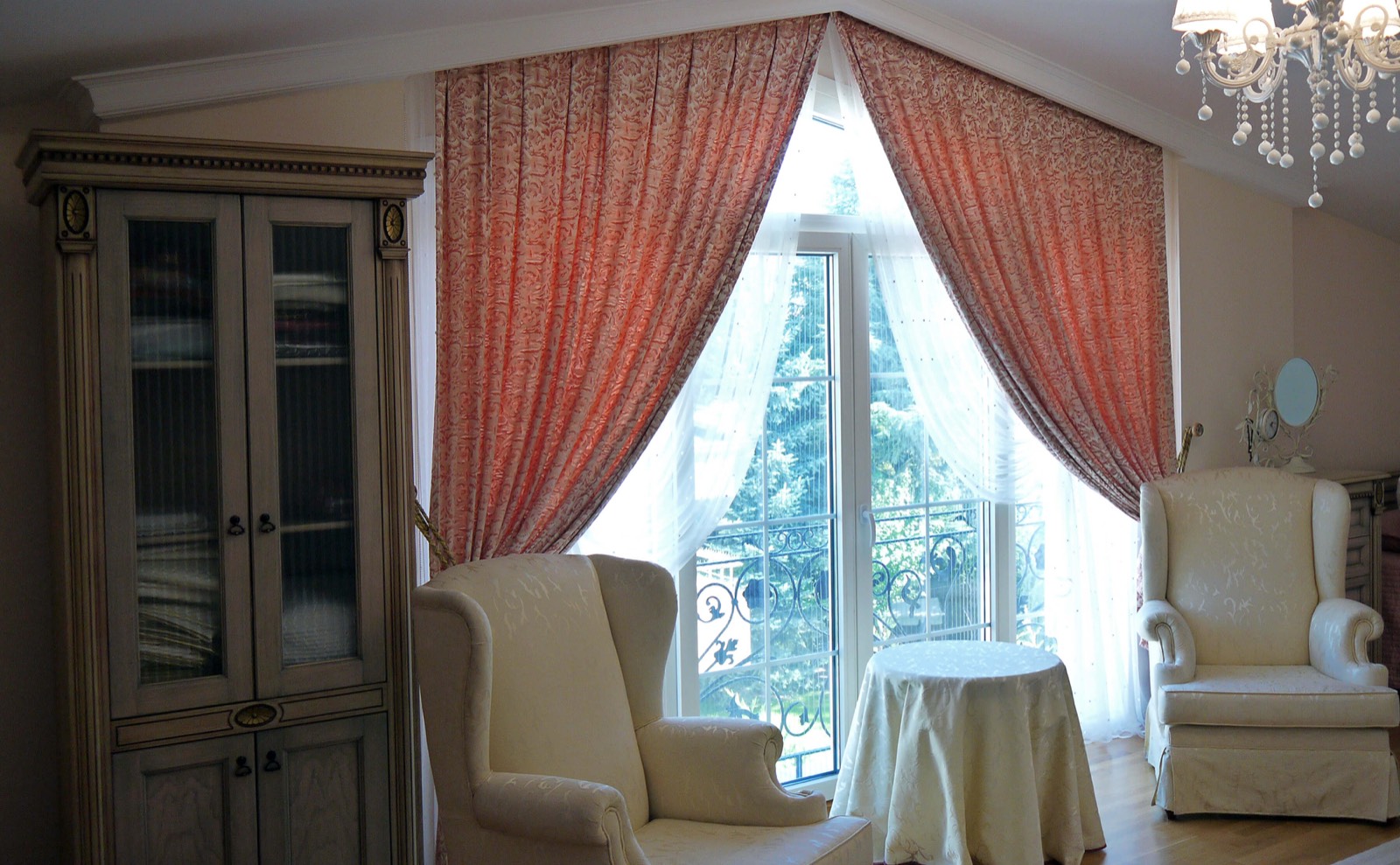
Shape alone does not determine the solution
Separate fixed and moving parts of triangular, trapezoidal, arched, sloping and roof windows. The opening direction, handle and hinge positions, and the space available for the treatment to stack are just as important as the outline of the window.
Pleated blinds are useful, but not universal
Some shapes can be treated with pleated blinds; others are better suited to a specially tracked curtain, fixed textile panel, roller blind, Venetian blind or a combination developed for the architecture. For tall or wide openings, weight, frequency of use and possible motorisation also need assessment.
Templates, dimensions and fixing surfaces
Standard width and height measurements cannot define irregular geometry. Angles, corners, diagonals, glazing beads, frame depth and fixing surfaces should be checked on site. Before ordering, confirm that the shape and dimensions fall within the chosen manufacturer’s limits.
Compact comparison
A starting point for different window shapes
- Triangular or trapezoidalA fixed or suitably controlled moving treatment; accurate angles are essential.
- Arched or semicircularFixed textiles, specialist tracks or suitable cellular and pleated options, subject to product limits.
- Roof windowA guided system holds the fabric close to the slope while preserving the window’s operation.
- Tall or wide openingLoad capacity, access, division into panels and motorisation become more important.
Quick selection guide
Which option is suitable, and when?
Related solution